


Home / Expertise

Expertise


Ten funding routes, assessed against one requirement. In most engagements more than one is used together.

We work from the business requirement backwards, not from a single product forward. The facility follows from what the business actually needs, how it holds stock, how it gets paid and how it invests.

Our work spans working capital, term and machinery finance, trade finance, structured debt, project and construction finance, secured business finance, and CGTMSE-backed credit for eligible micro and small enterprises.

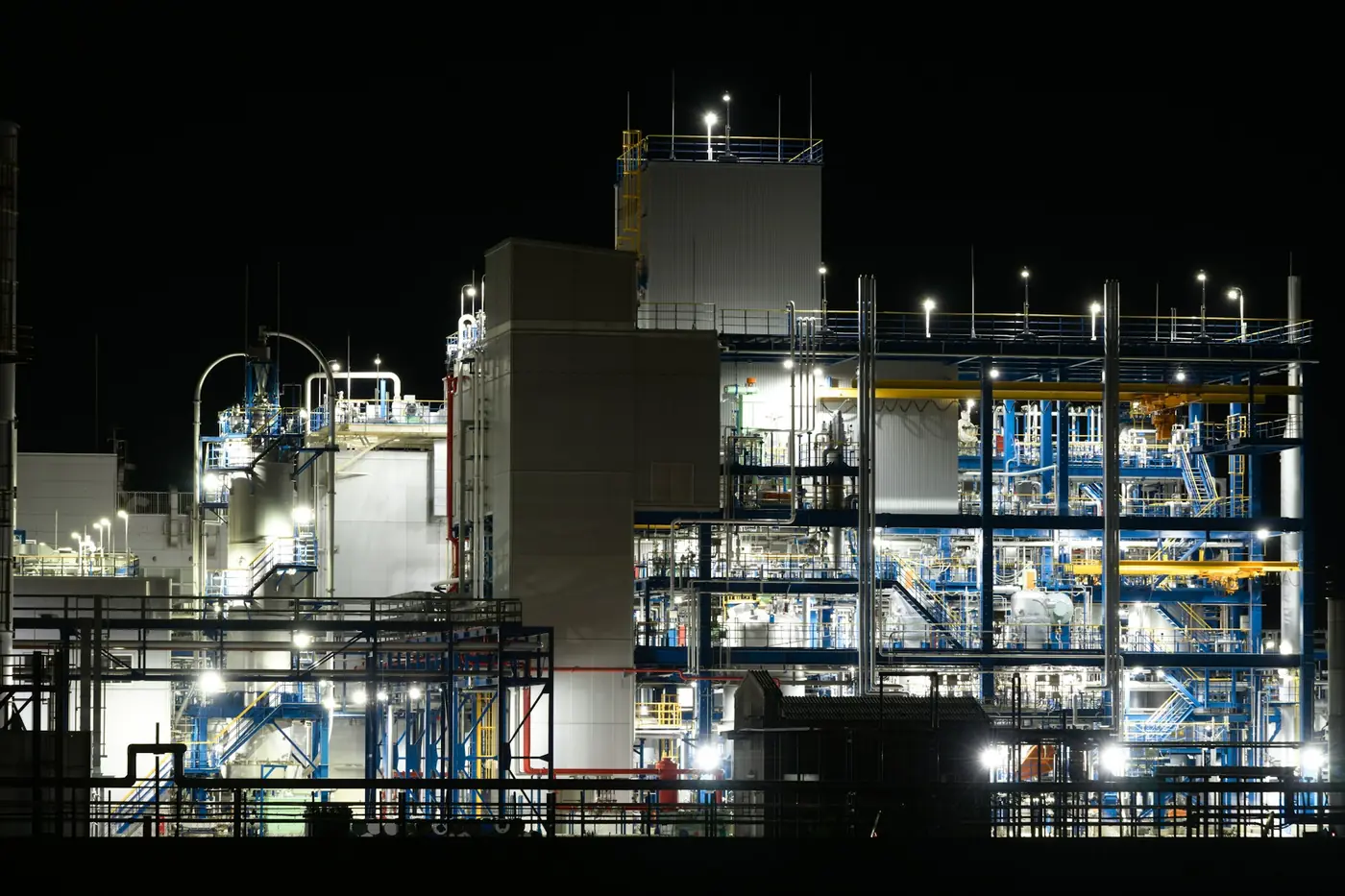
A chemical plant lit up at night

Funding routes

Each route is assessed against the same requirement. The right answer is often a combination. Linked routes are covered in detail below.

01

Working capital

Cash credit, overdraft and working capital demand loans, sized to the real operating cycle rather than a requested number.

02

Business and term finance

Term funding for expansion, capacity addition and identified business purposes.

03

Machinery and equipment finance

Finance linked to plant and equipment, with repayment tracking the payback of the asset.

04

Trade finance

Letters of credit, bank guarantees, and pre- and post-shipment export finance.

05

Structured debt

Secured, partially secured and hybrid-security structures for requirements that do not fit a standard template.

06

Project and expansion finance

Milestone-linked funding for new units, new lines and larger initiatives.

07

Construction finance

Project-linked finance for eligible construction and real-estate development.

08

Secured business finance

Loan against property and other security-backed routes.

09

CGTMSE-backed credit

Guarantee-backed credit for eligible micro and small enterprises, where the route genuinely fits.

10

Balance transfer and top-up

Refinancing, consolidation and enhancement of existing borrowing where it improves the position.


Working capital

Better structure. Better visibility. Better borrowing discipline.

Most working-capital problems are assessment problems, not funding problems.

A limit is sanctioned once, the business doubles, and the gap gets filled by delayed supplier payments, bill discounting or private borrowing at rates that quietly consume the margin. We size the requirement against the operating cycle, correct the drawing-power position, and consolidate facilities spread across multiple banks.


Business and structured finance

Covers funding routes 02, 03 and 05: business and term finance, machinery and equipment finance, and structured debt.

These cases are not un-fundable. They are un-templated, and the facility has to be built rather than selected.

A business may have strong cash flows and weak collateral, a strong order book and a thin balance sheet, or assets that are valuable but already charged. We evaluate structured routes on cash flows, security, promoter contribution, existing debt and the economics of the underlying transaction.

  • 02 Business and term financeExpansion, capacity addition and identified business purposes
  • 03 Machinery and equipment financeRepayment tracking the payback of the asset
  • 05 Structured debtSecured, partially secured and hybrid-security structures

Trade finance

Workers walking through a warehouse aisle lined with stacked goods

For businesses that import, export or buy on documentary terms, the funding need sits inside the transaction.

Letters of credit, bank guarantees and pre- and post-shipment export finance address the need directly, often without consuming fund-based limits, and often at materially lower cost than borrowing cash to do the same job.

  • Bank guaranteesIncluding the guarantee capacity that tenders depend on
  • ReceivablesInvoice discounting and supply chain finance

Not sure which route fits?

A preliminary view usually takes one conversation and a look at recent financials and bank statements. The first conversation is free and carries no obligation.


Project and construction finance

Funding that keeps pace with construction rather than lagging it.

Covers funding routes 06 and 07: project and expansion finance, and construction finance.

Project lending is assessed against what a project will earn, not what the business earns today.

We build the cost sheet, contribution, schedule and projections a lender will test, arrange consortium participation where needed, and structure disbursement in phases linked to construction milestones.

  • 06 Project and expansion financeGreenfield and brownfield expansion: new units, new lines and larger initiatives
  • 07 Construction financeEligible construction and real-estate development, against approvals, certified cost and sales velocity
  • Consortium lendingMore than one lender where a single lender will not take the full exposure

CGTMSE-backed credit

A genuine specialisation of the firm, assessed alongside conventional secured routes rather than assumed to be the answer.

What it is

The Credit Guarantee Fund Trust for Micro and Small Enterprises, set up by the Ministry of MSME and SIDBI, provides guarantee cover to eligible Member Lending Institutions on qualifying credit facilities.

CGTMSE does not lend. The loan is appraised, sanctioned, priced and disbursed by the lender, and a borrower applies to the lender rather than to the Trust.

Who it suits

  • A business with sound cash flows and no property to offer
  • A first-time borrower
  • A new unit where the promoter's capital is already committed to plant and machinery

We assess it with the guarantee fee counted, so the choice is made on economics rather than on the word "collateral-free".

Important

  • Guarantee cover is not an automatic approval. The lender remains responsible for credit appraisal, viability, documentation, pricing and sanction.
  • The borrower's full repayment obligation is unchanged.
  • An annual guarantee fee applies. Coverage is subject to the prevailing ceiling and proportions.
  • Primary security and promoter guarantees may still be required.
  • Scheme terms are revised periodically. The current official scheme documents apply at the time of each proposal.

"Collateral-free" always carries a qualification: primary security, promoter guarantees, margin, hypothecation and other conditions may apply depending on the facility and the lender.


What we assess

Whatever the eventual route, the same ground is covered.

  • Nature and vintage of the business
  • Turnover
  • Profitability and cash generation
  • Banking conduct
  • Credit history
  • Existing leverage
  • GST and statutory compliance
  • Promoter background
  • Purpose and end-use of funds
  • Security available

Who we help

Two kinds of business owner come to us: those approaching a bank for the first time, and those whose existing borrowing no longer fits the business.

First facility Several of our engagements were first bank facilities

First-time borrowers

A running business that has never borrowed from a bank, funded so far from the promoters' own savings or from family, and now in need of capital to grow. We start from the beginning, explain each stage, and handle all communication with the bank.

No property to offer
We assess whether CGTMSE-backed credit fits the case.
No formal accounts
We help organise the records first, then build the file.
No banking history
First-time borrowers are welcome. We guide the business through the entire process.
A first bank facility, Rajasthan
18 to 30% High NBFC interest rates of 18 to 30% when bank finance is possible

Existing borrowers

A growing business whose bank limits have not kept pace, or which is paying more interest than it needs to. We review current borrowing, identify where the business is losing money, and correct it.

Limits too low
We present the business's growth to the bank for enhancement.
Too many banks
We consolidate facilities into a cleaner structure.
High-interest loans
We refinance them into lower-cost bank finance.
Three banks consolidated into one, engineering company

Talk to us about your funding.

Tell us about the business and the loan you need, and we will review it with you.

Free first conversationNo obligationStrictly privateAnswer within 48 hours